


The Journey of Steel Through a Hot-Dip Galvanising Plant
The Journey of Steel Through a Hot-Dip Galvanising Plant
We wanted to prepare a detailed article for you on ‘The Journey of Steel in a Hot-Dip Galvanising Plant’, a topic that has attracted a great deal of interest.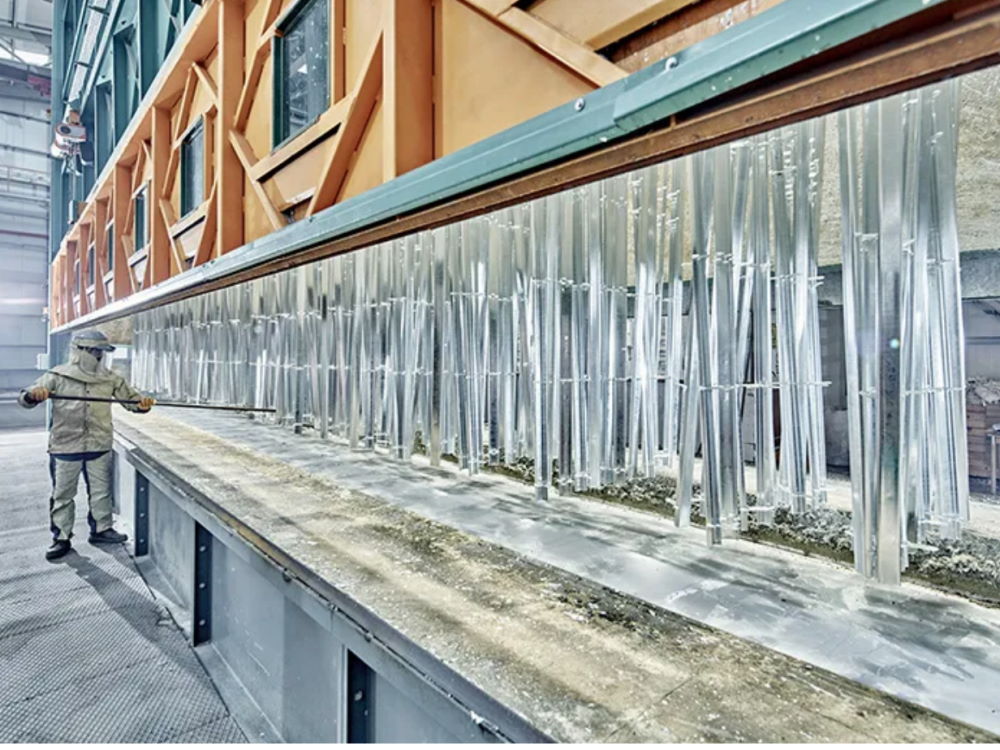
Description and Purpose of the Galvanising Plant
A galvanising plant is a specialised industrial facility where metals, primarily steel and iron, are coated with zinc through a process known as galvanising. This zinc coating acts as a protective barrier that shields the underlying metal from corrosion and significantly extends its service life when exposed to various environments.Its Importance in Industrial and Commercial Applications
Galvanising plants play a significant role in many sectors, such as construction, the automotive industry, energy and infrastructure. The corrosion-resistant properties of galvanised steel make it the material of choice for structural components, electricity pylons, automotive chassis and countless other applications where durability is essential. Below, we explain the steps involved in the hot-dip galvanising process for a steel product.Pre-treatment (Cleaning and Surface Preparation)
Before metal components are galvanised, they must undergo a thorough cleaning process. The pre-treatment section typically comprises degreasing tanks, acid baths for acid cleaning, rinsing stations and rinse baths. The nature of this pre-treatment sequence is explained below:- Degreasing: This is the first stage in the pre-treatment process for steel to be galvanised. In the degreasing tanks, the steel is cleaned of oily contaminants left over from the production processes. Degreasing is essential for effective pre-treatment, as oil and grease on the product affect the performance of both the acid pickling and galvanising processes.
- Acid treatment: Following the degreasing process, the steel products are immersed in a hydrochloric acid (HCl) bath. This process is designed to remove layers of iron oxide and grinding residues from the product’s surface, thereby creating a bare steel surface capable of reacting with molten zinc.
- Rinsing: The products are then immersed in clean water, which prevents any acid or other contaminants remaining from the previous steps from spreading further. At this stage, the steel surface is restored to a clean starting point.
- Fluidisation: As the final step in the pre-treatment process, the steel product is immersed in a solution consisting of water, zinc chloride and ammonium chloride. Whilst zinc chloride protects the uncoated steel from rust formation until it is galvanised, ammonium chloride wets and activates the steel surface, making it more receptive than ever to a sound and efficient reaction with the molten zinc.